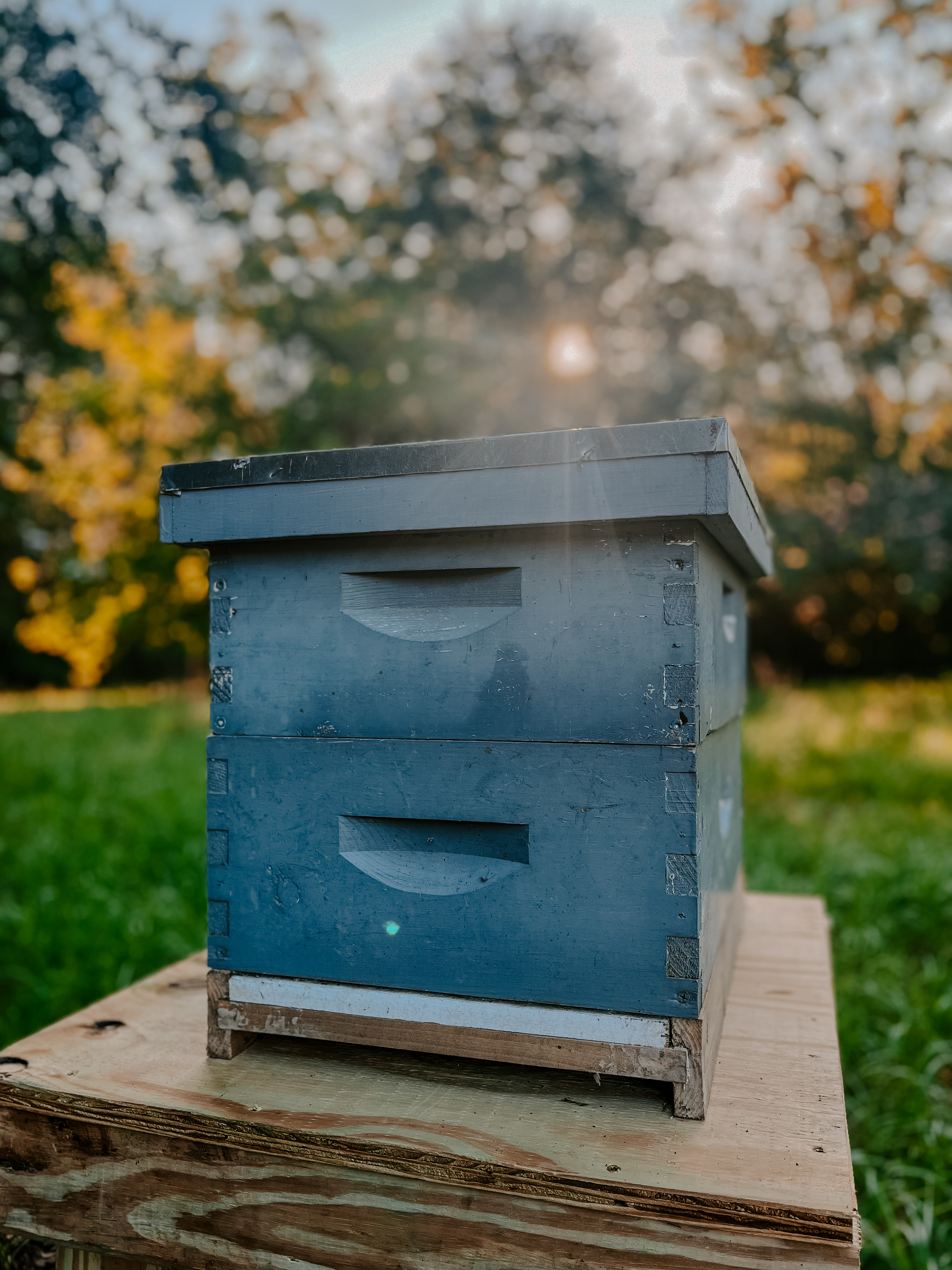
How Bees Survive the Winter
When winter arrives, and flowering plants disappear, it may look like it, but bees don’t vanish. Different species use different, well-documented strategies to survive cold temperatures and limited food sources.
Being educated on what bees do in the winter months helps us protect them better.
Honeybees Stay in the Hive
Honeybees do not hibernate or migrate. They remain inside their hive all winter, only exiting for a cleaning flight when temperatures rise.
As temperatures drop, the colony forms a winter cluster around the queen, and worker bees generate heat by contracting their flight muscles. This allows the cluster to maintain a survivable internal temperature even when outside temperatures are very cold.
The honey they have stored throughout the spring and summer is their only food source during winter unless they have a keeper who provides nourishment for them. By consuming the honey stored, they can fuel heat production and basic activity. For this reason, ethical beekeeping practices make sure that colonies are left enough honey to survive until spring.
Honeybees may move within the hive during warmer winter days to access stored honey, but they rarely leave the hive unless temperatures rise significantly.
Native Bees Overwinter in Place
Most native bee species (think carpenter bees) do not live in colonies. Instead, they overwinter individually.
They overwinter in protected locations such as:
• Underground tunnels
• Hollow or pithy plant stems
• Wood
• Leaf litter
This is why fallen leaves, dried plant stems, and undisturbed soil are important habitats for pollinators, and it is best to leave those areas alone until the temperatures rise.
Why Winter Survival Matters
Winter survival directly affects bee populations the following spring. High winter losses can reduce pollination activity, which impacts both wild ecosystems and food production.
For honeybees, winter colony strength influences spring brood production, early pollination availability, and overall hive health. For native bees, survival determines whether local populations can reproduce and maintain stable numbers.
How You Can Help Bees in Winter
There are simple ways to support bees during the colder months:
• Leave fallen leaves and plant stems until spring
• Avoid tilling or disturbing soil unnecessarily
• Refrain from using pesticides and herbicides
• Support local beekeepers who practice ethical hive management
• Provide natural habitat rather than overly manicured landscapes
A Quiet but Critical Season
Winter is a period of reduced activity, not absence. Bees are still present, still alive, and still dependent on the resources and habitats available to them.
Protecting bees during winter helps ensure healthy pollinator populations when spring arrives.
Leave a Reply